CyberIncidents Logo
[ 00 ]Specialized Topic

Malware & Trojans

6

Articles

Malware & Trojans

Latest Articles

SocGholish Fake Updates: Investigating Multi-Stage Malware Delivery
October 11, 202613 min read

SocGholish Fake Updates: Investigating Multi-Stage Malware Delivery

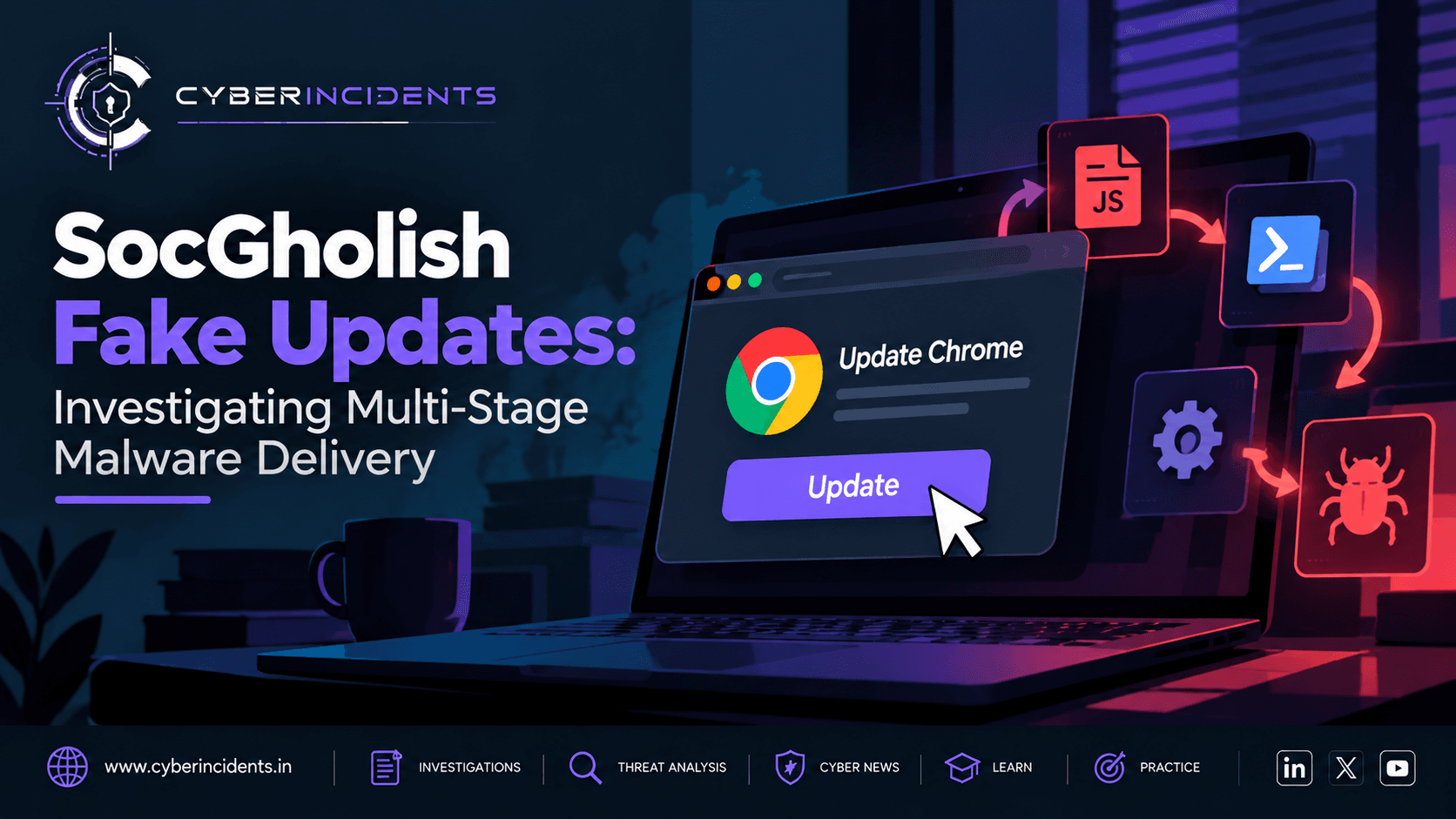
SocGholish, also known as FakeUpdates, is a JavaScript-based malware loader distributed through compromised websites that display convincing fake software-update prompts. When a user downloads and executes the disguised payload, the infection can progress through system discovery, additional payload delivery, remote-access activity, and potentially ransomware deployment. Effective investigation requires correlating browser activity, script execution, endpoint telemetry, and network connections across the complete attack timeline.

Read More→
Detecting API Hashing and Dynamic API Resolution in Malware
October 11, 202612 min read

Detecting API Hashing and Dynamic API Resolution in Malware

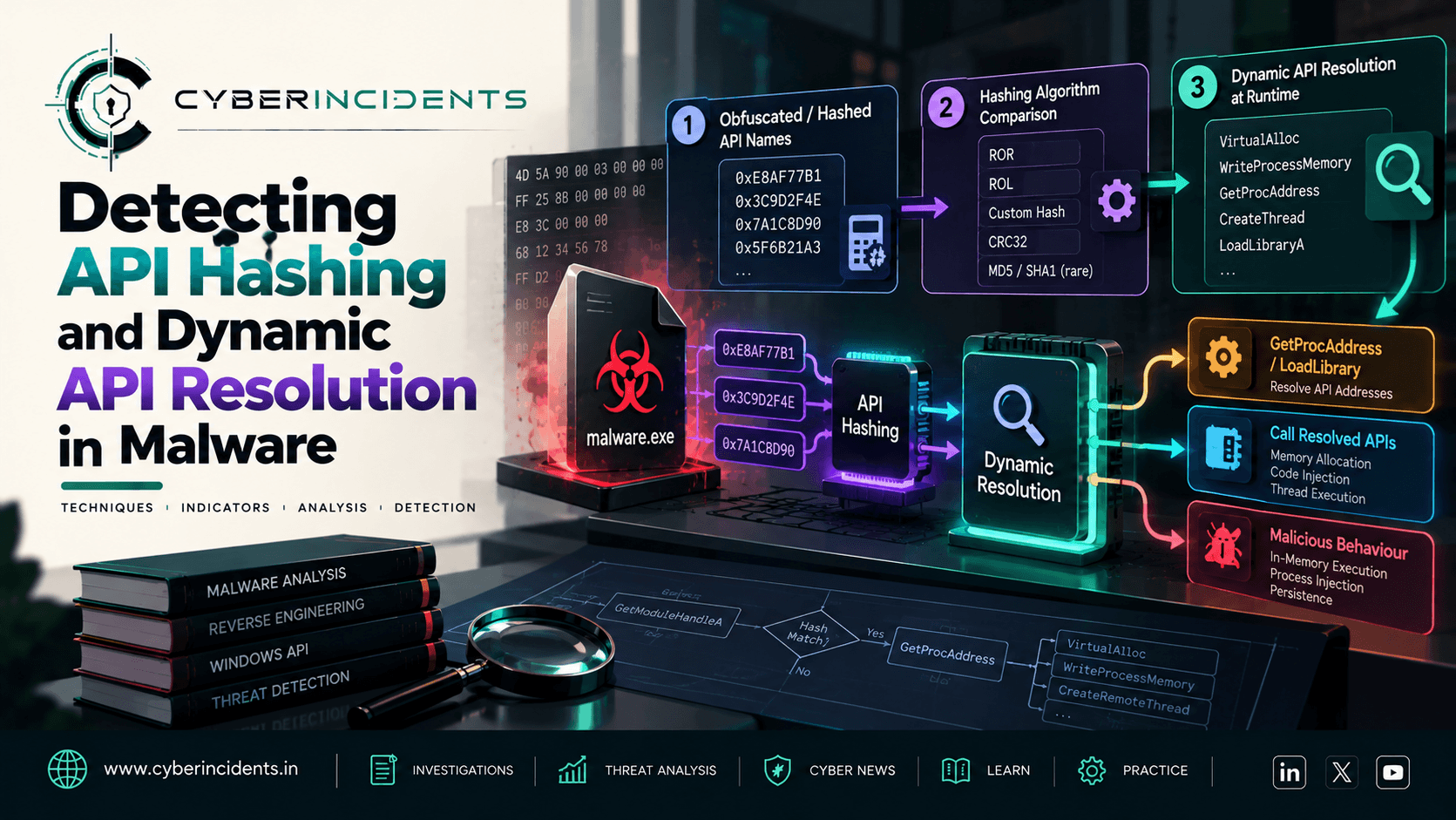
Malware authors often use API hashing and dynamic API resolution to hide their reliance on Windows functions. Instead of importing functions by their readable names, malware may calculate hashes of API names and resolve the required functions at runtime. This can make suspicious imports less visible during static analysis. Analysts can investigate these techniques by examining PE imports, suspicious hashing routines, runtime module lookups, memory behaviour, and API call sequences.

Read More→
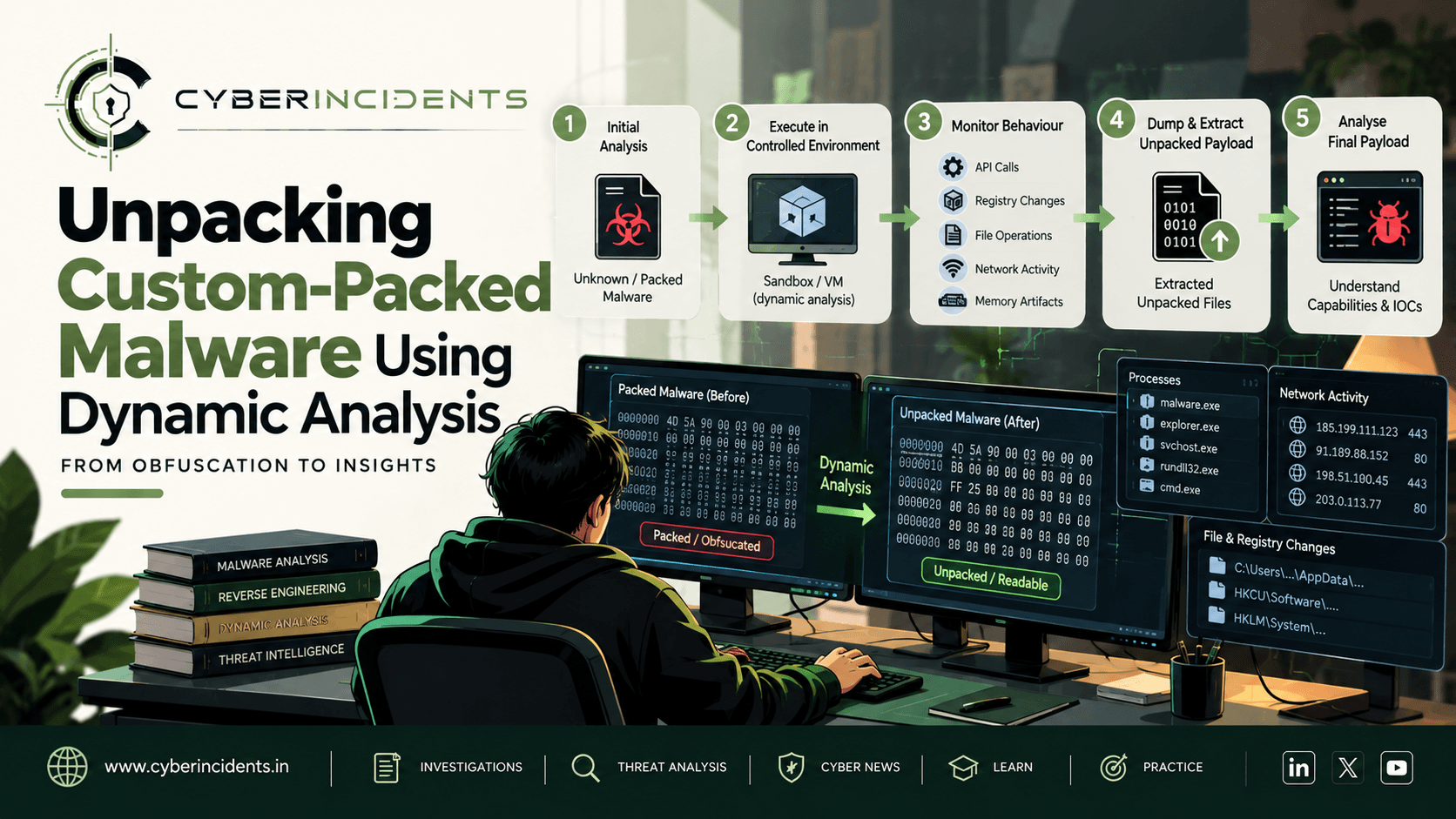
Unpacking Custom-Packed Malware Using Dynamic Analysis
October 11, 202612 min read

Unpacking Custom-Packed Malware Using Dynamic Analysis

Malware authors often use custom packers to compress, encrypt, or transform malicious code, making static analysis more difficult. Dynamic analysis helps researchers observe what happens when a sample executes in a controlled environment. By monitoring memory changes, process activity, file operations, and network communications, analysts can investigate unpacking behaviour, recover useful artefacts, and develop stronger detection strategies.

Read More→
Analysing Reflective DLL Injection and In-Memory Payload Execution
October 11, 202612 min read

Analysing Reflective DLL Injection and In-Memory Payload Execution

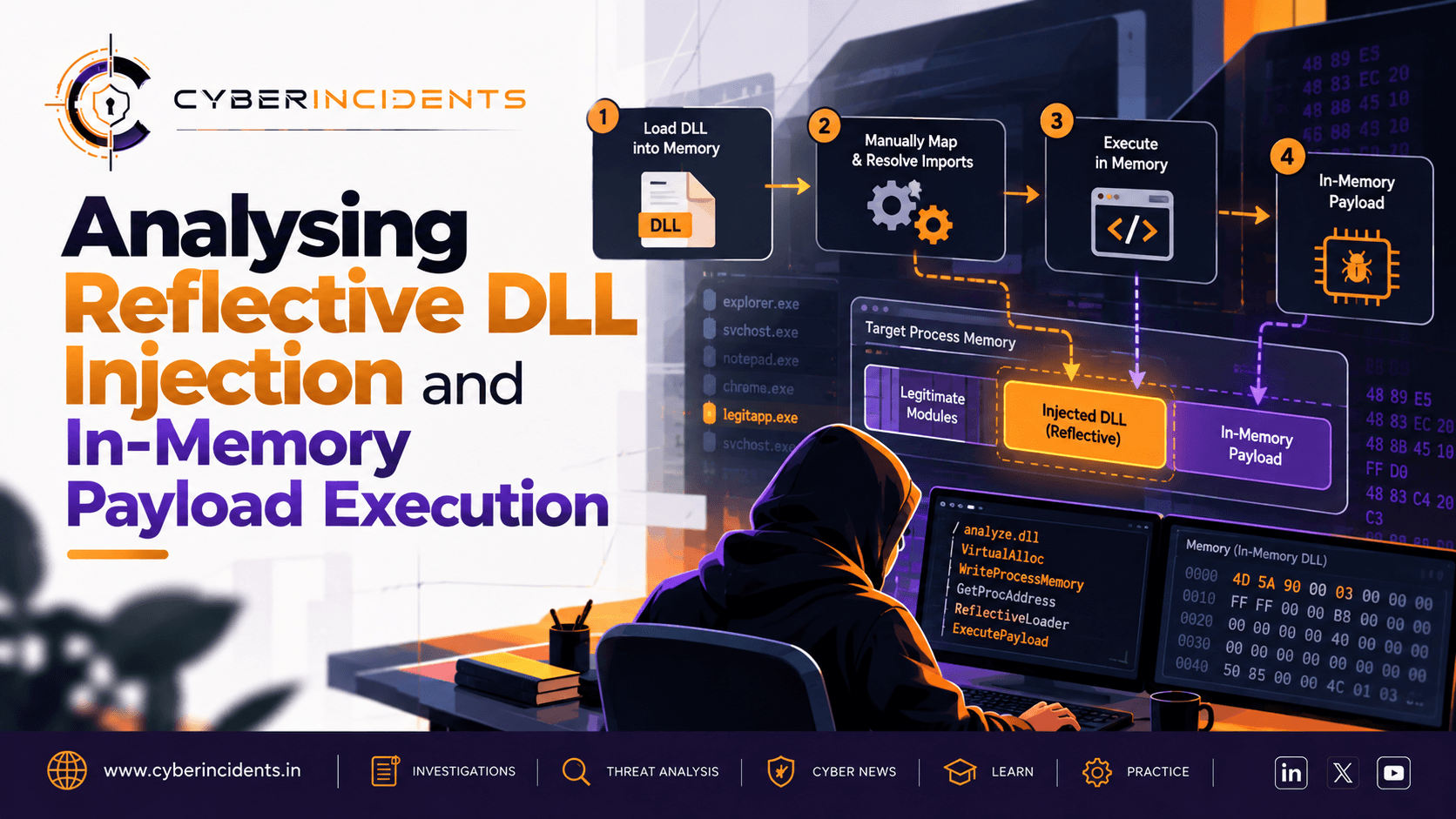
Reflective DLL injection is a technique that allows a Dynamic Link Library (DLL) to be loaded into a process without following the conventional Windows DLL-loading process. Combined with in-memory payload execution, it can help attackers execute malicious code while reducing their reliance on files written to disk. For SOC analysts and incident responders, identifying these attacks requires examining process behaviour, memory permissions, thread activity, and endpoint telemetry rather than relying exclusively on file-based detections.

Read More→
Baiting Attacks: From Malicious USB Drives to Fake Downloads
October 11, 202611 min read

Baiting Attacks: From Malicious USB Drives to Fake Downloads

Baiting is a social engineering technique in which attackers exploit human curiosity, greed, or the desire to obtain something useful to trick victims into compromising their security. Common examples include malicious USB drives left in public places, fake software downloads, free digital content, and fraudulent offers that encourage users to open files or install malware. Unlike attacks that rely entirely on technical vulnerabilities, baiting often begins with a simple psychological trigger. A person discovers an unfamiliar USB drive or downloads a seemingly useful application, unknowingly initiating an attack. For security teams, preventing baiting requires employee awareness, controlled device usage, trusted software sources, endpoint protection, and effective monitoring of suspicious activity.

Read More→