CyberIncidents Logo
[ 04 ]Operational Domain

Security & Defense

Security operations, defensive technologies, monitoring, detection, and enterprise security.

6

Articles

Security & Defense Intelligence

Latest Articles

Active Directory Security: Common Attack Paths and Defences
October 11, 202615 min read

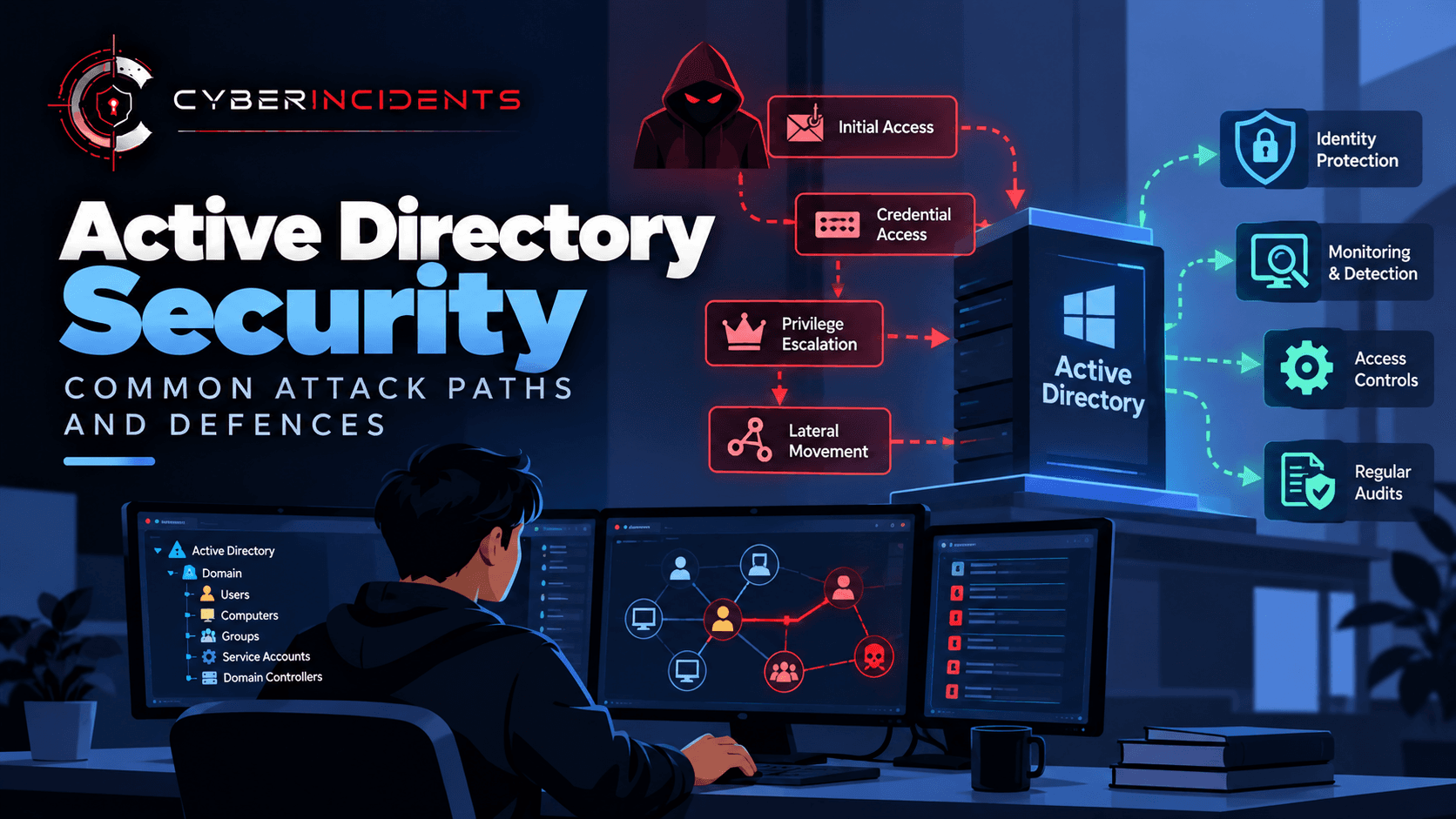
Active Directory Security: Common Attack Paths and Defences

Active Directory (AD) is a central identity and access management service in many Windows enterprise environments. Because it controls authentication, group membership, permissions, and access to domain resources, weaknesses in AD can allow attackers to move from a compromised workstation to highly privileged accounts. Common attack paths include credential theft, Kerberoasting, abuse of excessive permissions, NTLM relay, misconfigured delegation, and Group Policy abuse. Defending AD requires least privilege, strong authentication, secure configuration, tiered administration, continuous monitoring, and regular assessment of identity relationships.

Read More→

How Organisations Detect and Block Command-and-Control Traffic
October 11, 202614 min read

How Organisations Detect and Block Command-and-Control Traffic

Command-and-control (C2) traffic enables attackers to communicate with compromised systems, issue commands, retrieve information, and deliver additional payloads. Organisations detect suspicious C2 activity by correlating DNS queries, network flows, proxy logs, endpoint telemetry, and threat intelligence. Defensive controls such as DNS filtering, web proxies, firewalls, EDR, and network detection systems can help identify and block malicious communications. Because attackers often abuse legitimate services and encrypted protocols, effective detection requires behavioural analysis and correlation across multiple data sources.

Read More→
Zero Trust Security: Architecture, Implementation and Challenges
October 11, 202614 min read

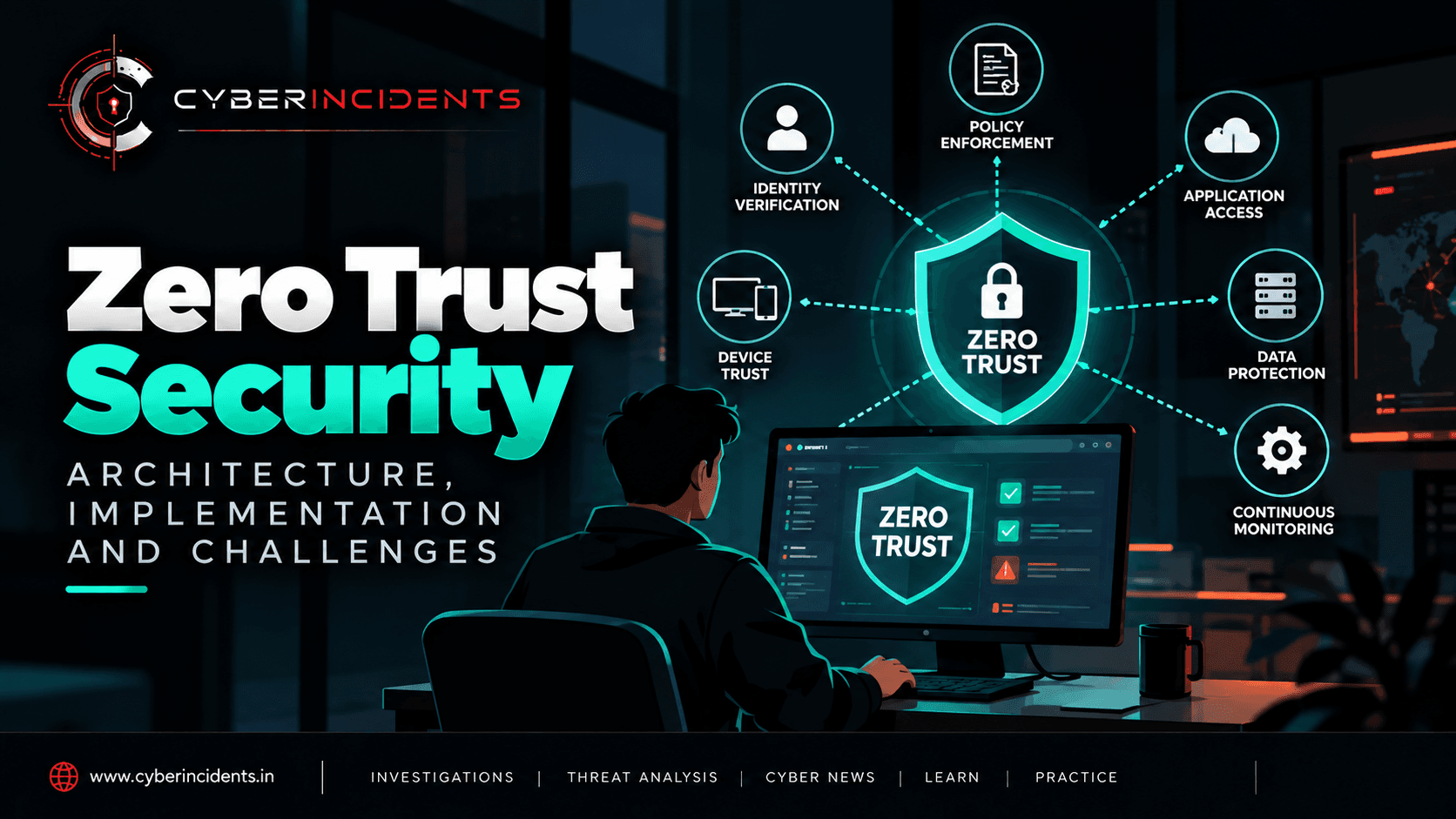
Zero Trust Security: Architecture, Implementation and Challenges

Zero Trust is a cybersecurity approach based on the principle of never automatically trusting a user, device, application, or network connection simply because it is inside a corporate network. Instead, access decisions are based on identity, device health, resource sensitivity, policy, and other relevant signals. Implementing Zero Trust requires strong identity controls, least-privilege access, continuous monitoring, and a phased approach to modernising security architecture.

Read More→
How EDR Solutions Detect and Prevent Cyberattacks
October 11, 202611 min read

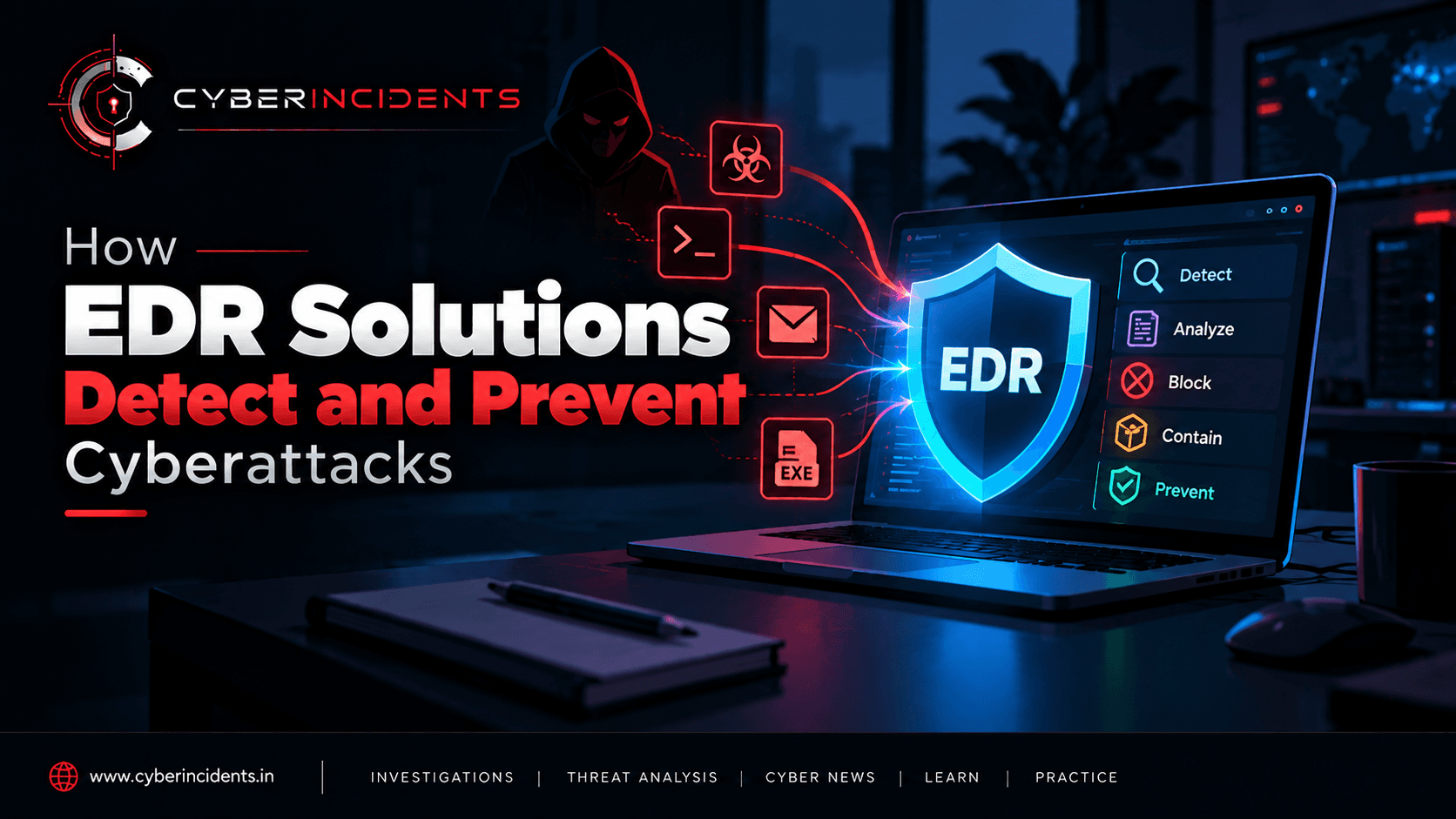
How EDR Solutions Detect and Prevent Cyberattacks

Endpoint Detection and Response (EDR) solutions monitor endpoint activity, analyse suspicious behaviour, detect potential cyberattacks, and support rapid incident response. By correlating process execution, file changes, registry activity, network connections, and other telemetry, EDR helps security teams identify threats that traditional signature-based antivirus may miss. Depending on the product and configuration, EDR can also isolate endpoints, terminate malicious processes, quarantine files, and support threat hunting.

Read More→
Defence Evasion Techniques Used by Modern Threat Actors
October 11, 202612 min read

Defence Evasion Techniques Used by Modern Threat Actors

Defence evasion refers to techniques threat actors use to avoid detection, weaken security controls, conceal malicious activity, or make an investigation more difficult. Modern attackers may abuse legitimate administrative tools, manipulate system configurations, disguise malicious files, or interfere with security monitoring. For SOC analysts, identifying these behaviours requires correlating endpoint, identity, and network telemetry rather than relying on a single alert.

Read More→