Cyber News
Com-Affiliated Hackers Exploit Vishing and MFA to Hijack Cloud Accounts and Steal Corporate Data
Vishing
17 min read
Identity Theft and Data Extortion
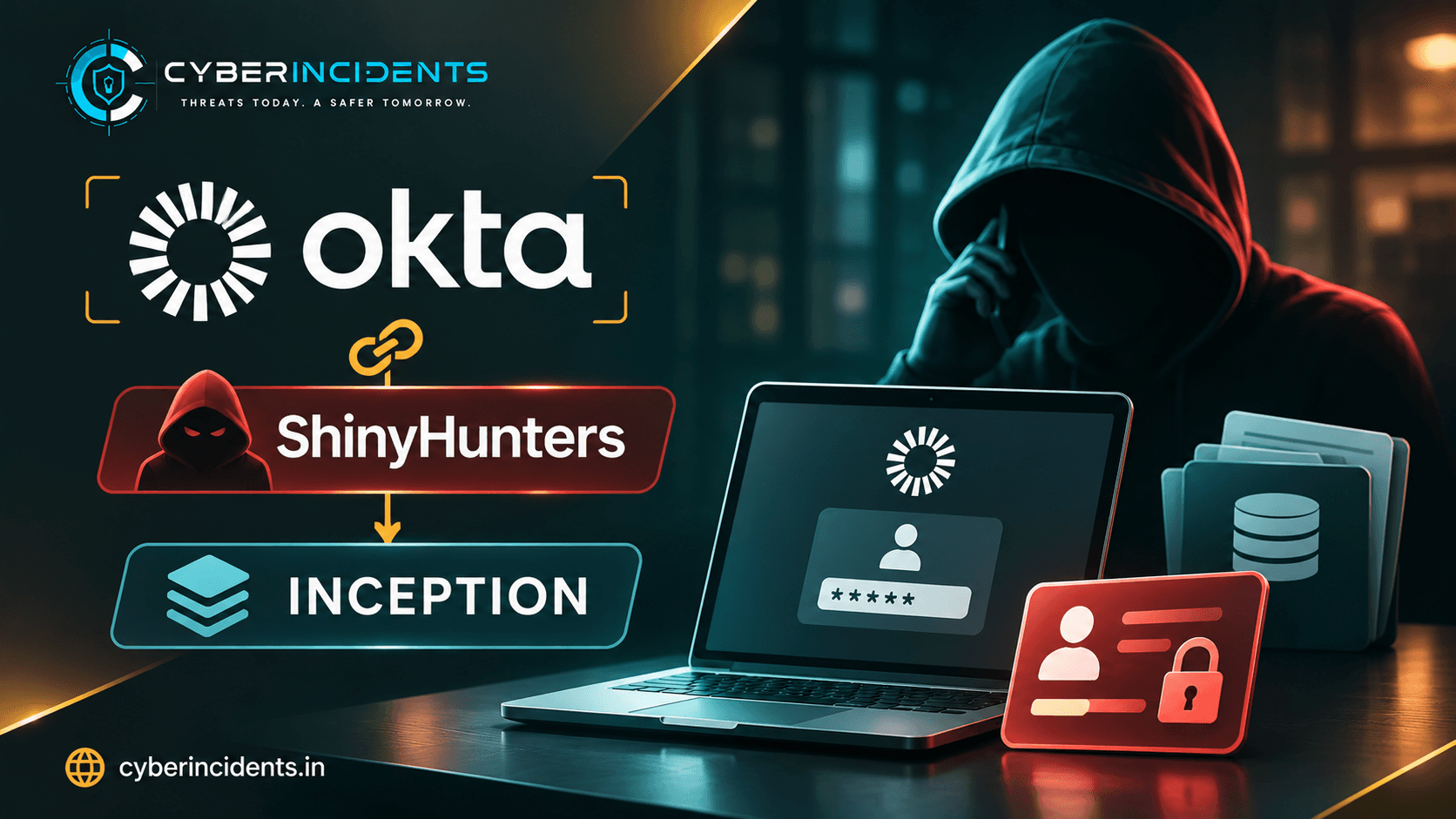
Okta Threat Intelligence has linked a threat cluster tracked as O-UNC-053 to a new data leak site operating under the name INCEPTION. The cluster was previously assessed to be associated with the ShinyHunters extortion group and has been active since at least March 2026.
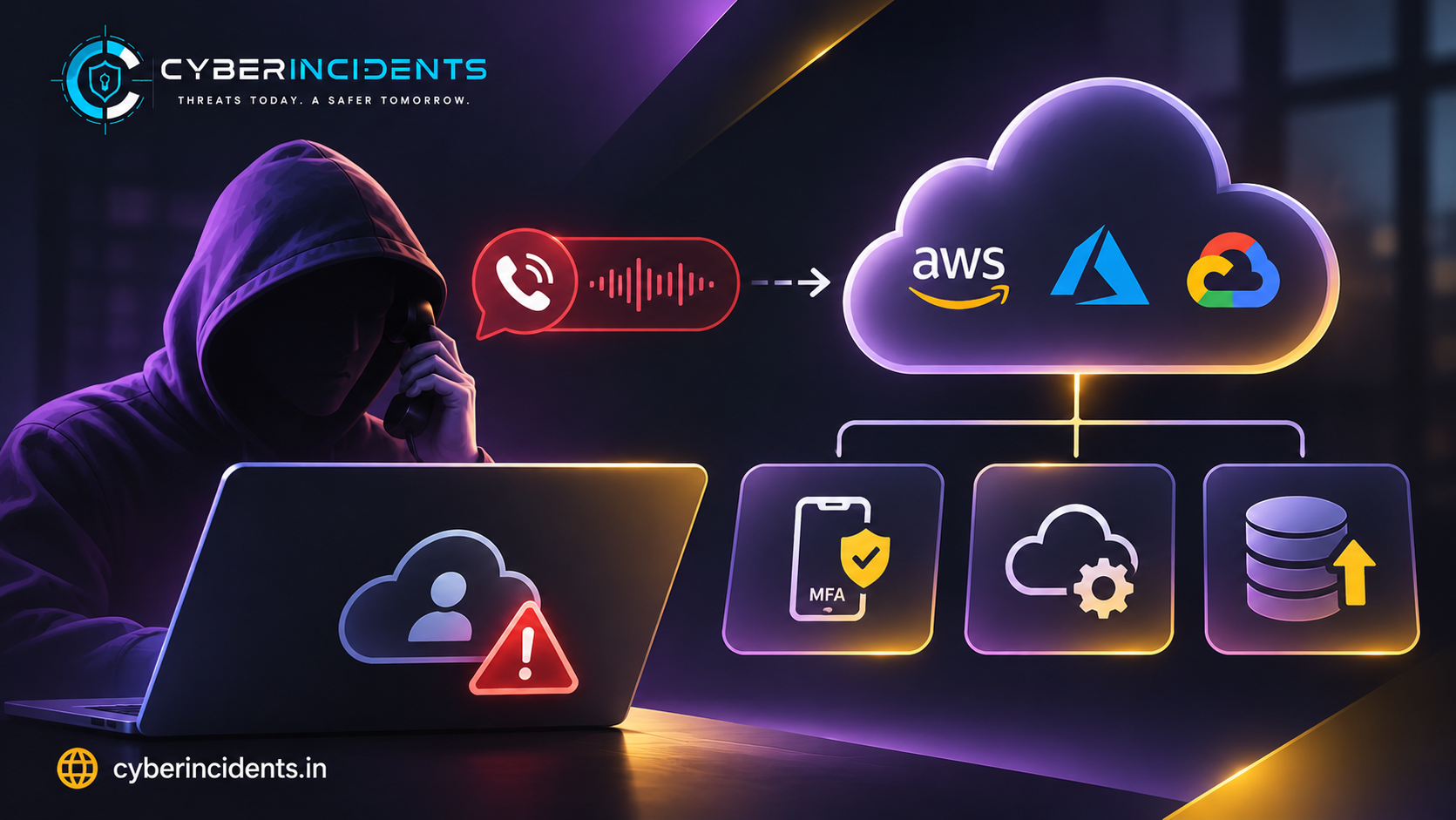
The group's primary technique is voice phishing (vishing). Attackers contact employees while impersonating trusted personnel, such as IT support or other organisational representatives. They persuade victims to visit convincing phishing pages, enter their credentials and approve multi-factor authentication (MFA) requests.
The phishing kit used by the group can intercept authentication flows and capture credentials and MFA codes. Once access is obtained, attackers target SaaS applications, collect sensitive information and use the stolen data for extortion.
A notable development is the appearance of victim data on the INCEPTION data leak site from November 16, 2026. Okta observed that organisations previously associated with O-UNC-053 had their data published on the ShinyHunters leak site. However, the exact relationship between O-UNC-053, ShinyHunters and INCEPTION remains unconfirmed.
Key security concern: An attacker may obtain a valid authenticated session through social engineering without exploiting a software vulnerability. Traditional controls that focus primarily on password theft or failed login attempts may not detect the complete attack.
O-UNC-053 is a threat cluster tracked by Okta Threat Intelligence since March 2026. It is characterised by targeted voice phishing campaigns designed to compromise employee identities and gain access to enterprise SaaS applications.
The cluster was previously assessed to be affiliated with ShinyHunters, an extortion-focused cybercrime group. Organisations targeted by O-UNC-053 had previously appeared on the ShinyHunters data leak site.
In November 2026, Okta identified a change in the publication of victim data. From November 16, 2026, data associated with O-UNC-053 targets began appearing on a new leak site called INCEPTION.
This suggests a possible change in the group's branding or extortion arrangements. However, the available reporting does not establish whether O-UNC-053 operates INCEPTION, collaborates with its operators or simply shares victims with them.
INCEPTION has publicly denied being ShinyHunters and claims to operate independently. Therefore, the relationship should be treated as an intelligence assessment rather than a confirmed organisational connection.
The campaign combines telephone-based social engineering with an adversary-in-the-middle-style phishing kit.
Instead of relying only on a fake email or a malicious attachment, attackers interact directly with employees over the phone. This gives them an opportunity to build trust, create urgency and guide victims through the authentication process.
The attack generally follows these stages.
Stage 1: Target selection and preparationAttackers identify organisations and employees they intend to target.
They register domains designed to resemble legitimate organisational or departmental websites. Earlier campaigns used help desk-, support- and claims-related themes. From October 2026, Okta observed increased use of legal-themed domains.
Examples include:
legal-<target>.com
legaldept-<target>.com
<target>.legal
<target>-legal.com
The domains are designed to appear relevant to the targeted organisation, increasing the likelihood that an employee will trust the website.
Stage 2: Voice phishingThe attacker contacts the targeted employee by telephone, often impersonating IT support or another trusted organisational contact.
The victim may be told that an account requires verification, that suspicious activity has been detected or that an authentication issue needs immediate attention.
The attacker then directs the employee to a phishing website and asks them to sign in.
The telephone interaction is important because it helps the attacker influence the victim's actions in real time.
Stage 3: Credential and MFA interceptionThe phishing page is designed to resemble the organisation's legitimate identity provider login page.
When the victim enters their credentials, the phishing kit intercepts the authentication flow. The attacker may also ask the victim to provide a one-time passcode or approve an MFA push notification.
This is not simply a static page collecting passwords. The kit is designed to interact with the authentication process and capture information that can help the attacker complete the login.
According to Okta, the kit used by O-UNC-053 is not designed to bypass phishing-resistant authentication methods such as passkeys and Okta FastPass.
This distinction matters: conventional MFA methods such as SMS codes, one-time passcodes and push approvals can be exposed to social engineering and real-time phishing. Phishing-resistant authentication binds authentication to the legitimate origin or cryptographic context, making this type of interception significantly harder.
Stage 4: Account takeoverIf the victim supplies the required credentials and authentication factors, the attacker may successfully authenticate to the organisation's identity provider.
The attacker can then access SaaS applications available to the compromised account.
This may include business collaboration platforms, cloud services, document repositories, customer systems and other applications connected through single sign-on.
A successful authentication event does not necessarily mean the activity is legitimate. It may represent an attacker using credentials and authentication factors obtained through social engineering.
Stage 5: Data collection and exfiltrationAfter obtaining access, attackers may identify sensitive information within connected SaaS applications.
Potentially exposed information can include:
Customer and employee records.
Internal business documents.
Financial information.
Confidential communications.
Intellectual property.
Authentication-related information stored in accessible resources.
The reported objective is to steal data and use it for extortion, including threatening to publish the information on a data leak site.
Stage 6: Extortion and leak-site publicationOkta observed that organisations targeted by O-UNC-053 previously had data published on the ShinyHunters data leak site.
From November 16, 2026, listings associated with multiple targets appeared on INCEPTION.
The change in leak-site branding is significant for threat intelligence and incident tracking. Security teams should not assume that a change in the name of an extortion site means the underlying threat activity has stopped.
However, the authenticity of all data published on INCEPTION and the exact relationship between its operators and O-UNC-053 have not been established in the reporting.
The campaign uses domains that incorporate the target organisation's name alongside terms such as legal, legaldept and -legal.
These names can make a phishing website appear connected to an organisation's legal department or a legitimate legal process.
For example, a domain such as:
legal-example[.]com
could be used to make an employee believe that the website is related to an internal legal or compliance matter.
Palo Alto Networks Unit 42 reported more than 70 legal-themed domains observed since October 2026. The domains were registered for specific intended targets across sectors including cryptocurrency, financial services, healthcare, technology and hospitality.
ReversingLabs also reported that these domains used a filtered phishing kit. Visitors who were not configured targets could be redirected to the organisation's legitimate Okta or NetIQ sign-in flow.
This behaviour can make casual inspection less reliable. A security analyst accessing the domain from an ordinary browser may not see the same content delivered to the intended victim.
The reported domains were registered through providers including NiceNIC, Spaceship, Tucows and NameSilo, with Cloudflare also observed in the infrastructure.
The main difference is the combination of human interaction, real-time authentication interception and targeted infrastructure.
Traditional phishing may depend on a victim clicking a link and entering credentials into a fake login page. O-UNC-053 adds a telephone conversation to influence the victim while authentication is taking place.
This creates several investigation challenges:
A valid login may be attacker-controlled: The identity provider may record a successful authentication even though the employee was manipulated into approving it.
MFA approval is not proof of legitimacy: An approved push notification or valid one-time passcode can be part of a compromised authentication flow.
The attacker may access SaaS applications without malware: The initial compromise may occur through identity abuse rather than endpoint exploitation.
Phishing infrastructure may be selectively presented: Redirecting non-target visitors to legitimate login pages can complicate analysis.
Leak-site branding may change: Tracking only the ShinyHunters name could cause analysts to miss subsequent victim disclosures associated with INCEPTION.
The following domains were specifically identified in the reporting shared in this article.
| Domain | Target organisation |
|---|---|
legal-pepsico[.]com | PepsiCo |
legal-paychex[.]com | Paychex |
legal-duolingo[.]com | Duolingo |
activisionblizzard-legal[.]com | Activision Blizzard |
legal-westernunion[.]com | Western Union |
legal-dropbox[.]com | Dropbox |
legal-indeed[.]com | Indeed |
legal-creditkarma[.]com | Credit Karma |
legal-amd[.]com | AMD |
legal-grubhub[.]com | Grubhub |
legal-twitch[.]tv | Twitch |
Infrastructure characteristics
| Attribute | Reported observation |
|---|---|
| Threat cluster | O-UNC-053 |
| Previous association | ShinyHunters-associated |
| New leak-site name | INCEPTION |
| Initial tracking | March 2026 |
| Legal-themed domain activity | From October 2026 |
| Leak-site listings observed | November 16, 2026 |
| Domain registrars | NiceNIC, Spaceship, Tucows, NameSilo |
| CDN / proxy infrastructure | Cloudflare observed |
| Authentication targets | Okta and NetIQ |
IOC handling note: The domains above are reported campaign indicators, not proof that every organisation listed was successfully compromised. Defang indicators when sharing them in operational channels. Validate current DNS, registration and hosting information before blocking, and preserve DNS and proxy evidence.
SOC teams should investigate this campaign as an identity compromise and potential SaaS data-exfiltration incident. A successful login should not be treated as proof of legitimate user activity.
The most useful approach is to correlate identity-provider telemetry, endpoint events, DNS records, proxy logs, SaaS audit logs and user-reported telephone activity.
Review Okta System Log events around the reported phishing or telephone interaction.
Look for:
Successful authentication from an unfamiliar IP address or ASN.
New device or browser characteristics.
Authentication events immediately following MFA push approvals.
Unexpected MFA factor enrolment or modification.
Repeated authentication attempts followed by success.
New sessions associated with unusual locations.
Access to applications that the user does not normally access.
Correlate the events with the user's historical authentication patterns. An unfamiliar IP address alone is not sufficient to confirm compromise.
Examine the authentication factor used and the sequence of events leading to successful authentication.
Determine whether the user received an unexpected push notification, supplied a one-time passcode or was instructed to approve an authentication request over the phone.
Check whether the authentication was performed using a phishing-resistant factor such as Okta FastPass or a passkey.
Do not assume that a successful MFA event proves the user initiated the session.
Search DNS, secure web gateway and proxy logs for access to the reported legal-themed domains.
Investigate:
First-seen domain activity.
DNS requests shortly before suspicious authentication.
Access from corporate endpoints to lookalike domains.
Redirect chains involving identity-provider login pages.
Requests to domains registered close to the campaign date.
Unusual browser sessions initiated after telephone contact.
Because the phishing kit may selectively serve content, analyse the complete HTTP redirect chain and preserve relevant responses where possible. Do not rely exclusively on manually opening the domain.
After identifying a suspicious authentication session, examine the applications accessed by the account.
Look for:
Unusual document downloads.
Bulk file access.
Unusual search or export activity.
Creation of sharing links.
Changes to mailbox rules or forwarding settings.
New OAuth application grants.
Access to unfamiliar collaboration workspaces.
Unusual API activity.
Correlate application audit events with the identity session, IP address, device and user-agent information.
Determine whether the employee's endpoint was involved in the phishing interaction.
Review browser history, EDR telemetry, DNS activity and process execution around the authentication event.
A vishing-based account takeover may not require malware execution. Therefore, a clean endpoint scan does not rule out identity compromise.
Determine whether the attacker accessed or downloaded sensitive data.
Review SaaS audit records, file access events, download volumes, API activity and outbound network connections.
If data exposure is suspected, preserve relevant logs and establish:
Which account was compromised.
Which applications were accessed.
Which records or files were viewed or downloaded.
Whether external sharing was enabled.
Whether data was transferred outside the organisation.
Whether the organisation has received an extortion demand or appeared on a leak site.
Do not conclude that data was exfiltrated solely because a group claims to possess it. Validate the claim against available evidence.
The following queries are hunting examples. Field names and event types may differ depending on the Okta, proxy, endpoint and SaaS logging integrations.
Query 1: Search for access to known legal-themed phishing domains
index=*
("legal-pepsico.com" OR "legal-paychex.com"
 OR "legal-duolingo.com" OR "activisionblizzard-legal.com"
 OR "legal-westernunion.com" OR "legal-dropbox.com"
 OR "legal-indeed.com" OR "legal-creditkarma.com"
 OR "legal-amd.com" OR "legal-grubhub.com"
 OR "legal-twitch.tv")
| stats count values(src_ip) values(user)
  values(dest) values(url) by index
| sort - count
Query 2: Identify successful Okta authentications from multiple IP addresses
index=okta
eventType="user.session.start"
| stats dc(client.ipAddress) as unique_ips
  values(client.ipAddress) as source_ips
  values(client.userAgent.rawUserAgent) as user_agents
  count by actor.alternateId
| where unique_ips > 1
| sort - unique_ips
This identifies accounts authenticating from multiple IP addresses in the selected time range. It is a triage query, not a standalone account-compromise detection.
Query 3: Identify MFA push activity
index=okta
(eventType="user.authentication.auth_via_mfa"
 OR eventType="user.mfa.okta_verify.deny_push"
 OR eventType="user.mfa.okta_verify.deny_push")
| table _time actor.alternateId eventType
  client.ipAddress client.userAgent.rawUserAgent
  outcome.result
| sort - _time
Validate event-type availability against the Okta System Log events collected by your environment. Review both successful and denied MFA activity.
Query 4: Identify unusual SaaS activity following authentication
index=saas_audit
| stats count values(action) as actions
  values(object) as accessed_objects
  dc(src_ip) as unique_ips
  by user
| where count > 100 OR unique_ips > 3
| sort - count
Tune the thresholds using application-specific baselines. High activity may be normal for automated integrations and power users.
Query 1: Search for known phishing domains in DNS logs
DnsEvents
| where Name has_any (
    "legal-pepsico.com",
    "legal-paychex.com",
    "legal-duolingo.com",
    "activisionblizzard-legal.com",
    "legal-westernunion.com",
    "legal-dropbox.com",
    "legal-indeed.com",
    "legal-creditkarma.com",
    "legal-amd.com",
    "legal-grubhub.com",
    "legal-twitch.tv"
)
| project TimeGenerated, Computer, ClientIP,
          Name, QueryType
| order by TimeGenerated desc
Query 2: Identify users with multiple sign-in IP addresses
SigninLogs
| where TimeGenerated > ago(24h)
| where ResultType == "0"
| summarize IPCount=dcount(IPAddress),
            IPAddresses=make_set(IPAddress),
            Applications=make_set(AppDisplayName)
    by UserPrincipalName
| where IPCount > 1
| order by IPCount desc
This query identifies successful sign-ins from multiple IP addresses. Use device, location, ASN and session information to distinguish legitimate travel, VPN usage and shared infrastructure from suspicious activity.
Query 3: Investigate unusual application access
SigninLogs
| where TimeGenerated > ago(24h)
| where ResultType == "0"
| summarize SignInCount=count(),
            IPAddresses=make_set(IPAddress),
            Devices=make_set(DeviceDetail),
            Applications=make_set(AppDisplayName)
    by UserPrincipalName, bin(TimeGenerated, 1h)
| where SignInCount > 10
| order by SignInCount desc
Query limitations: These queries identify suspicious patterns and known indicators. They cannot independently establish vishing, credential interception or account takeover. Correlate the results with Okta System Log events, MFA factor details, proxy telemetry, user confirmation and SaaS audit logs.
| Technique | ID | Relevance |
|---|---|---|
| Phishing: Spearphishing Link | T1566.002 | Directing employees to credential-harvesting websites |
| Phishing: Spearphishing Voice | T1566.004 | Voice-based social engineering |
| Steal Web Session Cookie | T1539 | Potential session theft where supported by evidence |
| Steal Application Access Token | T1528 | Potential theft or misuse of application tokens |
| Valid Accounts | T1078 | Using compromised employee credentials |
| Multi-Factor Authentication Request Generation | T1621 | Generating authentication requests that victims may be manipulated into approving |
| External Remote Services | T1133 | Accessing externally exposed services using compromised identities |
| Exfiltration Over Web Service | T1567 | Potential data theft through web-based services |
The mapping identifies relevant techniques for detection and investigation. Not every technique is explicitly confirmed in the supplied reporting. In particular, do not automatically classify every O-UNC-053 incident as session-cookie theft or token theft without supporting telemetry.
Deploy phishing-resistant MFA: Prioritise passkeys and Okta FastPass. These methods are designed to resist credential and MFA interception through lookalike phishing pages.
Train employees against telephone-based social engineering: Employees should never provide one-time passcodes or approve unexpected MFA prompts because someone claiming to be IT support asks them to do so.
Establish a trusted help-desk verification process: Employees should independently contact the help desk using an approved internal number or support portal rather than following instructions from an unsolicited caller.
Monitor lookalike domains: Use domain monitoring, DNS intelligence and brand protection services to identify newly registered domains that imitate organisational names or departments.
Revoke active Okta sessions and refresh tokens associated with the compromised account.
Reset credentials where exposure is suspected.
Re-enrol authentication factors if they may have been compromised.
Review recent MFA changes, application assignments and OAuth grants.
Investigate SaaS application access and identify sensitive data accessed or downloaded.
Review mailbox rules, external sharing permissions and other persistence mechanisms.
Preserve identity, endpoint, proxy and application logs.
Assess whether the organisation has experienced data exfiltration or extortion.
A password reset alone is not sufficient. Verify that active sessions, refresh tokens and other access mechanisms have also been revoked.
The O-UNC-053 campaign demonstrates how voice phishing can be used to compromise enterprise identity systems without exploiting a traditional software vulnerability.
By combining telephone-based social engineering, tailored phishing domains and authentication interception, attackers can manipulate employees into providing credentials and approving MFA requests.
The appearance of O-UNC-053-related victim listings on INCEPTION also highlights why threat intelligence tracking should focus on the underlying activity rather than relying exclusively on a group's name or leak-site branding.
For SOC teams, the key detection priority is correlating identity events with user behaviour, DNS activity, endpoint telemetry and SaaS application access. A successful login or MFA approval should never be treated as sufficient evidence that the legitimate employee initiated the session.
Continue reading
Cyber News
Vishing
Cyber News
Credentials Compromise
Cyber News
RCE vulnerability
3 entries, most recent posts.
Vishing
AI-Assisted Autonomous Intrusions

Identity Compromise / Session Hijacking