Introduction to Ransomware
Category: Threats & Attacks → Ransomware Level: Beginner
What Is Ransomware?
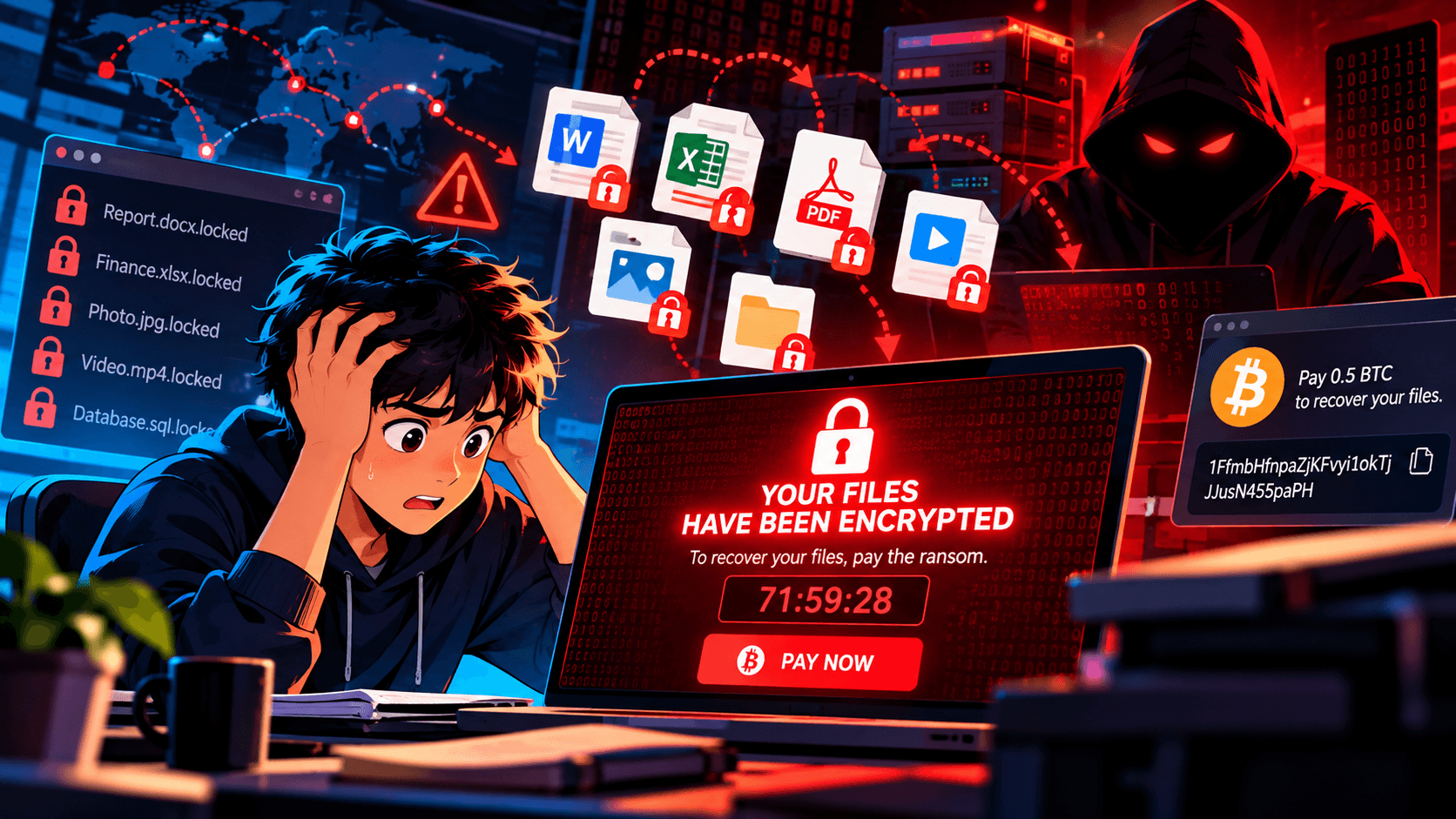
Ransomware is a type of malware designed to prevent people or organizations from accessing their files, systems, or data, usually in an attempt to demand money from the victim.
The word ransomware comes from:
Ransom + Malware = Ransomware
In a typical ransomware attack, malicious software gains access to a computer or network and then makes important files inaccessible. The attacker subsequently demands payment in exchange for supposedly restoring access or preventing stolen information from being published.
Ransomware can affect:
Individuals
Businesses
Schools and universities
Hospitals
Government organizations
Critical infrastructure
It has become one of the most disruptive forms of cybercrime because an attack can affect both data and business operations.
How Does Ransomware Work?
At a basic level, ransomware follows a simple idea:
Attacker ↓ Gets Access ↓ Malicious Software Runs ↓ Files or Systems Become Inaccessible ↓ Ransom DemandFor example, imagine that a person's computer contains:
Documents Photos Videos Work Files Financial RecordsAfter a ransomware attack, those files may no longer open normally.
The attacker may display a message such as:
"Your files have been encrypted. Pay a ransom to recover them."
The victim is then pressured to pay the attacker.
Why Is Ransomware Dangerous?
Ransomware can cause much more than the loss of individual files.
For organizations, it can interrupt:
Business operations
Customer services
Manufacturing
Healthcare services
Financial operations
Internal communication
Access to important records
For example, if a company's central file server becomes unavailable, employees may suddenly be unable to access documents required for their daily work.
This makes ransomware both a cybersecurity problem and a business continuity problem.
How Do Ransomware Attacks Happen?
There is no single way ransomware reaches a victim.
Common entry points include:
Phishing
An attacker sends a malicious email containing a link or attachment.
The victim interacts with it, potentially allowing malware to enter the environment.
Compromised Accounts
Attackers may obtain legitimate usernames and passwords and use them to gain access to systems.
Exploited Vulnerabilities
Attackers may take advantage of security weaknesses in outdated or vulnerable software.
Remote Access Services
Poorly secured remote-access systems can sometimes provide attackers with an entry point.
Malicious Downloads
Users may unknowingly download malicious software disguised as legitimate files or applications.
The important point for beginners is:
Ransomware is usually the final stage of an attack, not necessarily the first step.
An attacker may first find a way into an environment and only later deploy ransomware.
What Happens to the Files?
Many ransomware attacks use encryption to make files inaccessible.
Encryption is normally a legitimate security technology used to protect information.
Ransomware abuses the same general concept for malicious purposes.
A simplified example:
Before attack: report.docx photo.jpg database.db ↓ Ransomware ↓ report.docx → inaccessible photo.jpg → inaccessible database.db → inaccessibleThe attacker may claim that a special key or tool is required to restore the files.
This is why ransomware is particularly dangerous when an organization does not have reliable backups.
Modern Ransomware: More Than File Encryption
Ransomware has evolved significantly.
Older ransomware attacks often focused primarily on encrypting files and demanding payment.
Modern ransomware operations may also involve data theft.
The attacker may:
Gain access to an organization.
Find valuable information.
Copy sensitive data.
Encrypt systems or files.
Demand payment.
Threaten to publish the stolen information.
This approach is often called double extortion.
The victim therefore faces two problems:
Problem 1:
They cannot access their systems or files.
Problem 2:
Their confidential information may be exposed publicly.
Who Gets Targeted?
Ransomware does not only target large companies.
Potential victims include:
Individuals
Personal computers and files can be targeted.
Small businesses
Small organizations may have limited security resources and backup capabilities.
Large enterprises
Large organizations provide attackers with potentially valuable data and access to extensive networks.
Healthcare organizations
Hospitals and healthcare providers depend heavily on system availability.
Educational institutions
Universities and schools maintain large amounts of personal and administrative information.
Government organizations
Government systems may contain sensitive information and critical services.
Why Do Attackers Use Ransomware?
The primary motivation is usually financial gain.
Cybercriminals may demand payment in cryptocurrency or through other payment mechanisms.
However, ransomware operations can involve multiple motivations and participants.
Some groups specialize in obtaining initial access.
Others may develop ransomware.
Others may negotiate with victims or operate leak websites.
This has contributed to the development of Ransomware-as-a-Service (RaaS).
What Is Ransomware-as-a-Service?
Ransomware-as-a-Service is a model in which ransomware operators provide tools or infrastructure to other criminals, often called affiliates.
A simplified model is:
Ransomware Operators ↓ Provide Malware / Infrastructure ↓ Affiliates ↓ Target Organizations ↓ Ransom Demand ↓ Criminal RevenueThis model can allow people without advanced malware-development skills to participate in ransomware operations.
The result is a broader ransomware ecosystem rather than a single attacker working alone.
Latest posts
3 entries, most recent posts.
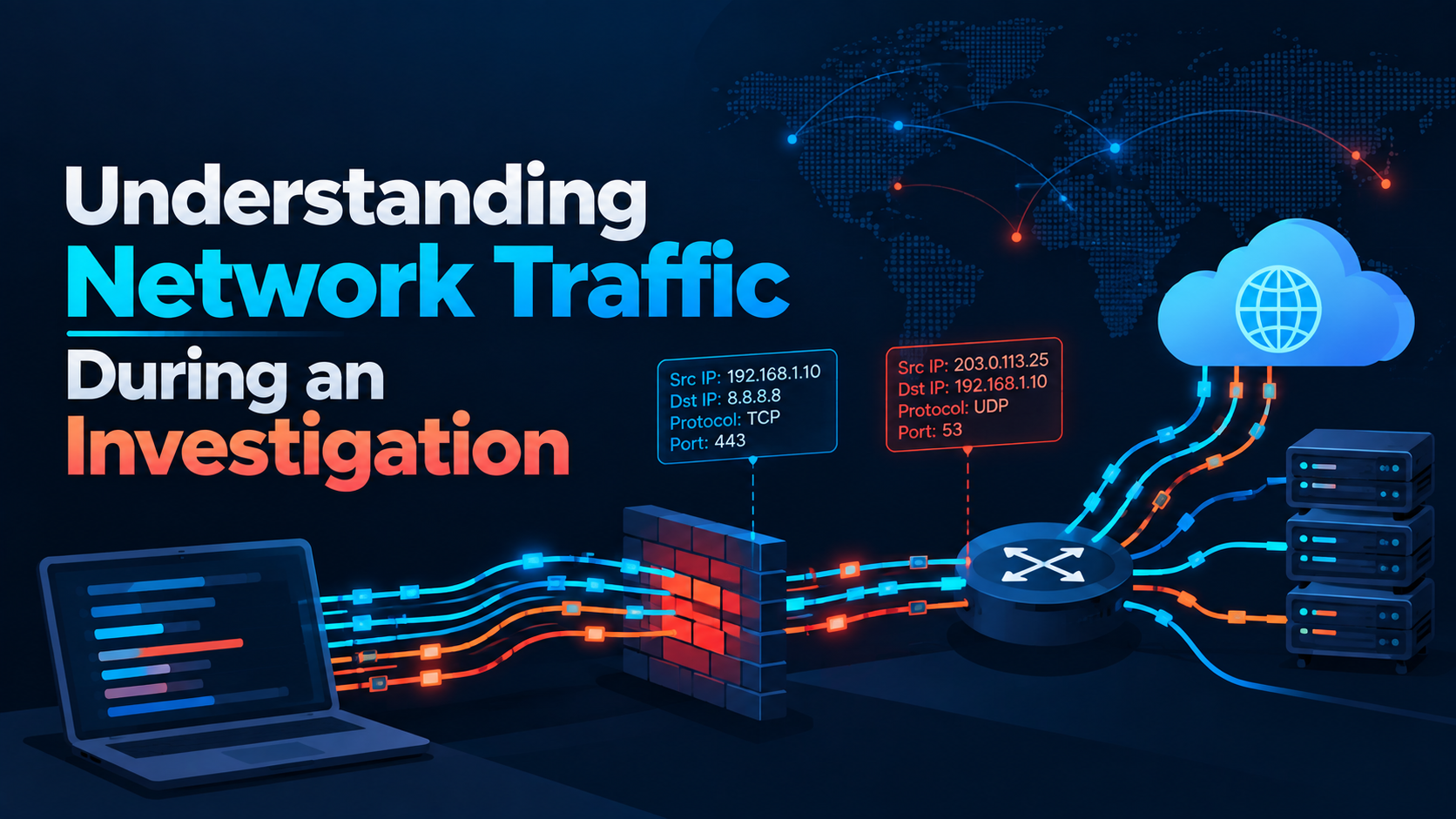
Understanding Network Traffic During an Investigation
Level: Intermediate
Fake ChatGPT, Gemini, and Claude Ad Portals Capture Credentials and MFA Codes
Category: Phishing / Artificial Intelligence

Citrix patches NetScaler SAML zero-day exploited in attacks
Severity: High CVSS: 8.7 Affected Products: Citrix NetScaler ADC & NetScaler Gateway Attack Type: Denial of Service / Possible Remote Code Execution